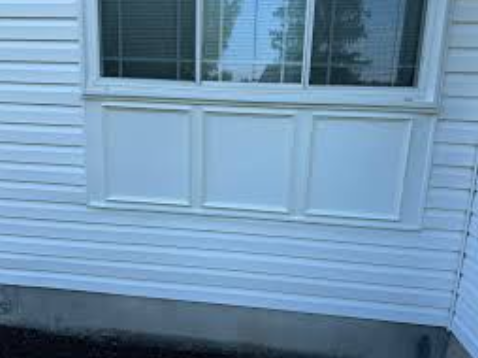

A seller on a Sandy cul de sac walked me around her split entry last spring and stopped at the north wall before I could say anything about it. Hail had taken that elevation out twelve years earlier, the crew replaced it in the closest almond they could source, and the manufacturer discontinued that color line about two years after the truck pulled away. She had already typed siding Sandy UT into her phone and was scrolling contractors while we stood in the driveway, hoping somebody could blend the wall back in for a few hundred dollars. The answer I give sellers now, every single time, is that re-siding the whole elevation in one current material and color costs more than another patch and is the only version that ever stops showing.
The Patch Looked Fine For One Season
Fresh off the truck, that repair looked right. Nobody standing on the lawn that first October would have called it a repair at all. The trouble is that the other three elevations had been sitting in Utah sun for a dozen years, and vinyl loses a little color every summer. Think about a dentist matching a crown to the tooth beside it. The shade is perfect under the chair light, then the patient walks out to the parking lot and the whole thing announces itself. Exterior color works that way too, except the daylight test runs every afternoon for a decade.
By the second spring the north wall read a half step warmer than the rest of the house. What I keep seeing on split entries around the valley is that owners stop noticing the drift, because they park in the same spot and approach from the same angle every day. Buyers notice in about four seconds, from the street, before anyone gets a key in the door.
See also: Building a Life Rooted in the Land
Mismatched Walls Read As Deferred Maintenance
A buyer standing at the curb is not grading the color. They are grading what the color implies. A wall that does not match says a repair happened here, that nobody finished it, and that other work on this house may have been handled the same way. I have watched that one observation turn into questions about the roof, the furnace, and whether the sewer line was ever scoped, none of which have anything at all to do with siding. Appraisers have language for the extreme version of this, and it is not flattering language. Most of the time it never travels that far, because the cost has already been paid in showing feedback and in the offers that quietly never arrive.
The money side is easier to picture with round numbers, so here is an illustrative one rather than a bid. Say the full elevation runs somewhere in the low five figures to strip and redo, while the patch quote sits under a thousand dollars. The seller who takes the patch tends to meet a buyer who asks for a credit against the entire exterior anyway, and that credit almost never gets negotiated back down to the price of the patch. The cheap fix is only cheap until the offer arrives.
There is a second cost that sellers underrate, which is that a mismatched wall cancels out the one advantage a well kept older home has. Everything else on that Sandy property was tidy. Edged lawn, clean gutters, a new steel front door, fresh trim paint on the garage. The north wall undid all of it from forty feet away. Listing photos could not rescue it either, because a photographer shoots the front three quarter view and that elevation sits right in the frame, one shade off, in every single image a buyer scrolls past on their phone.
Questions Owners Ask After A Bad Repair
Three questions come up on nearly every walkthrough where an old repair still shows. They are worth settling before you call for a quote. The answers do not depend on which contractor you hire.
Can New Siding Be Color Matched To Old Siding?
Sometimes, if the line is still made and the walls are young. After a decade of exposure the old material has shifted and the new panel has not. When the line is discontinued, as almond was here, the question is no longer about matching.
Is Replacing One Elevation Cheaper Than The Whole House?
Yes, and on plenty of houses it is the sensible move. One elevation gives corner to corner coverage from a single lot of material, and the corner boards give the new work a natural stopping point. What decides it is whether the other walls can sit beside a new one without looking tired.
Does A Mismatched Wall Really Affect Resale?
It moves the conversation more than the appraisal. Buyers read an unfinished repair as a list of other repairs they cannot see, and that shows up as softer offers rather than a line item. Sellers who fix the wall first hear about the kitchen instead.
Replace The Full Elevation In One Pass
The fix that holds is not a clever one. Strip the elevation, correct whatever the hail hid behind the old panels, and re-side corner to corner in a current line so every piece on that wall came off the same production run. A June 2026 read of the Remodeling magazine cost versus value report put full siding replacement at 75 to 85 percent of project cost recovered at resale, while patching mismatched siding recovers 0 percent and leaves the damage in plain view. That gap is the whole argument.
The seller on that cul de sac had the north elevation redone before we listed, and the photos finally showed one finished house instead of a record of two storms. The siding Sandy UT search she started in her own driveway ended with a crew, a color she chose on purpose, and a wall no buyer has asked about since. If a repair on your house still reads as a repair after a few summers, price the full elevation before you price another patch, because that is the number that ends the problem.