
Two hundred square feet of attic insulation sat wet from June to October in a North Port three bedroom slab home, and the ceiling under it never showed one stain. What the owners noticed instead was a musty smell near the hallway closet and a power bill that crept up a little every month, which is the quiet version of the problem behind a lot of calls for roof repairs in North Port FL. I inspected buildings for three decades and I still keep a moisture meter in the truck, so these notes come from the attic side of the job rather than the sales side. The argument is short. The entry point has to be found and repaired before one square foot of insulation, drywall, or duct board gets replaced.
A Leak Announces Itself In The Attic First
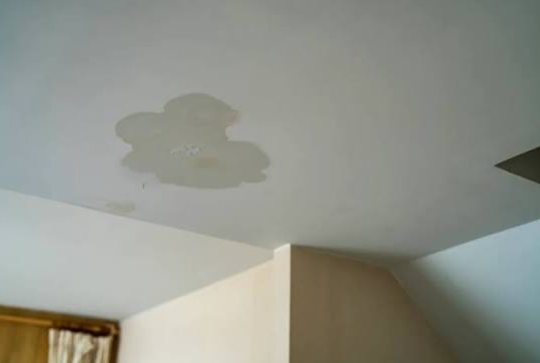
Water reaches the insulation long before it reaches the paint. A lifted ridge cap or a backed out nail lets a cup or two in during every afternoon storm, the batt underneath absorbs it, and the ceiling below stays clean because fiberglass will hold that water rather than pass it along. What I usually find on a call like this is a dark, matted patch overhead with dry drywall an inch beneath it, which is exactly why nobody in the house has any reason to suspect the roof. The smell shows up first, the power bill second, and the stain sometimes never arrives at all.
Resist the urge to climb up and check it yourself. Federal rules are blunt about the risk: OSHA’s ladder standard at 1926.1053(b)(7) bars using a ladder on slippery surfaces until those conditions have been corrected.
See also: Building a Life Rooted in the Land
Wet Insulation Stops Insulating Immediately
An R-value is a dry material rating, and it collapses the moment the batt takes on water. Soaked fiberglass mats down and loses its loft, so the ceiling plane over that two hundred square feet was effectively an uninsulated hole in the envelope from June onward while the rest of the attic kept doing its job normally. The air handler answered the only way it can, with longer run times, and the owners read that as an aging unit instead of a roof problem. The case I see most often is the homeowner suspecting the air conditioner first, because the air conditioner is the machine making the noise.
A landlord with a duplex a few streets over found the same thing in reverse. His tenant complained about the smell in July, a handyman pulled and replaced the insulation in August, and the new batt was damp again by the second week of September because nobody had been on the roof. That is the expensive order of operations, and it is common enough that a repair-first roofer will ask about it before quoting anything.
Wet building materials need to be dried out or removed quickly, inside a day or two, not left to season through another rainy month. Once growth is visible across a large area, it belongs to a remediation professional rather than a homeowner with a spray bottle, and anyone in the house who has asthma or a compromised immune system should stay out of the affected space until it has been cleared. That overlap is also why roof repairs in North Port FL and attic work get quoted together so often.
Adding Up One Summer Of A Hidden Leak
Run the numbers on that first house. Two hundred square feet of R-30 batt, at say $1.90 a square foot to pull and replace, comes to $380. The air handler ran roughly eighty minutes a day longer than the previous summer, which on a three ton system at a hypothetical 16 cents per kilowatt hour is about $34 a month, so call five months of it $170. Reset the ridge section with new underlayment and flashing for something like $700. That is $1,250 for a summer of not knowing, and the only line that had to be spent was the $700.
Waiting also gets worse on its own, because the replacement side of the market keeps moving. A March 2026 pricing notice from Tony’s Roofing put full asphalt shingle replacement at over $19,800 in 2025, with tariff pressure on materials pushing manufacturing costs further through early 2026. A repair scoped in June is a very different conversation than a tear off priced a year later.
Questions Owners Ask About Musty Air
Why Does My House Smell Musty When Nothing Looks Wet?
The insulation is holding the water and the drywall under it is still dry. Attic air gets into the living space through can lights, the attic hatch, and duct chases. You smell it in the hallway weeks before anything appears on a ceiling.
Will Wet Attic Insulation Dry Out By Itself?
In a vented Florida attic in August, not dependably. Outdoor air that humid pulls very little moisture back out of a soaked batt. Anything that has been wet for more than a couple of days should come out.
How Do I Know The Leak Is Actually Fixed?
Ask for photographs of the entry point itself, not of the general area. A moisture meter reading taken at the same spot two weeks later, after a heavy storm, settles it. If a roofer cannot show you where the water was getting in, the repair was a guess.
Find The Entry Point Before Replacing Anything
Order of operations matters more than speed here. Find the entry point, photograph it, repair it, and only then price the insulation and any drywall. A roofer who runs leak detection and hands over a documented photo report is selling the diagnosis, and the diagnosis is the part you cannot get from standing under the ceiling with a flashlight. If the smell started in June and it is now October, the repair is already late, the insulation is later still, and doing those two in the wrong order just buys you wet insulation twice.