
Is the water actually leaking, or is the valve simply wrong? That is the question a homeowner lands on somewhere around the third overnight alarm, once the novelty of a connected shutoff has worn off and the main has closed itself twice before sunrise. The device cannot answer it and neither can the app, which is why settling the question usually takes an hour with a plumbing company ocean city md owners call for leak detection rather than another firmware update. One visit with a pressure gauge and listening equipment tells you whether the valve is right, and that is the entire difference between trusting the hardware and pulling it out of the wall. The house I keep thinking about is 2,100 square feet on a canal, fed by a three quarter inch main, running on well water that swings pressure every time the pump cycles.
Smart Valves Measure Flow Not Leaks
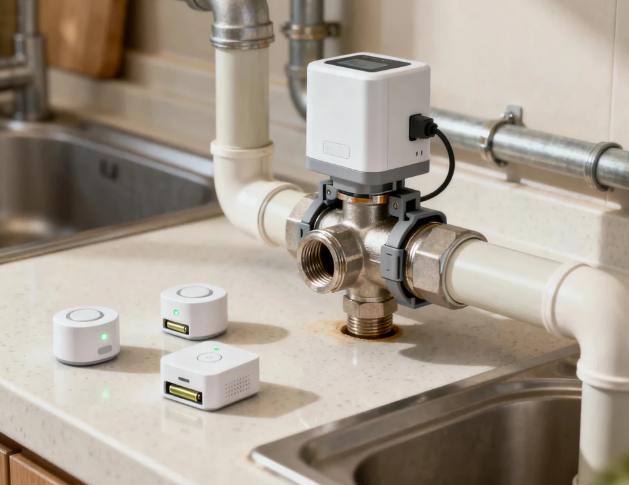
The sensor inside the valve body tracks two things: how fast water is moving and how long it keeps moving, with line pressure as a supporting reading. It does not see water on a floor. A shower left running and a supply line weeping inside a wall cavity therefore look remarkably similar from inside that valve, because both are just flow that failed to stop when the algorithm expected it to. Well water makes the pressure half of the picture noisier still, since a pump kicking on and off all night keeps shifting the baseline the valve compares everything against. Think of it as a stopwatch with a shutoff attached, not a detective.
Harmless things move water at two in the morning: an ice maker cycling, an irrigation zone on a controller nobody has looked at since spring, a recirculation pump running on a timer, a water heater relieving thermal expansion. Owners chasing quiet often reach for the heater thermostat first and drop the storage temperature, and that is the one change worth thinking through before making it. A piece in Plumbing & Mechanical Magazine from August 2026 restated the rule the trade works to, which is that water held above 140°F (60°C) in a storage tank is what keeps Legionella from establishing itself, while a tempering valve blends that supply down to a safe 45-50°C at the fixture. Turn a tank down below that to hush a sensor and you have swapped a nuisance alert for a bacteria risk you cannot see or smell. Leave the storage temperature alone and fix the reason the valve is unhappy.
Questions Owners Ask After The Third Alert
The same handful of questions circulate through every canal street group chat, and they are the questions a plumbing company ocean city md residents call will hear on the phone before anyone schedules anything. What usually turns up on these houses is boring rather than dramatic: a toilet flapper passing a slow trickle, a hose bib dripping into gravel where nobody notices, or a pressure sag the sensor read as loss. None of that shows up in an alert history. All of it shows up on a gauge.
How Do I Tell A Real Leak From A Bad Reading?
Shut every fixture, then watch the water meter or the valve’s own live flow number for fifteen minutes. Movement with nothing running means water is leaving the system somewhere, and that is worth a same day call. A dead still reading during the exact window the valve keeps alarming points at the sensor’s thresholds instead, which is a settings conversation rather than a repair.
Should I Just Turn The Alerts Off?
Silencing the notification leaves the valve closing the main anyway, so the only thing you lose is the warning. Muting mine for nine days taught me that much (and I would rather not describe how the ninth day went). Raising the flow duration threshold a little is the reasonable middle step, though it only makes sense once somebody has confirmed the house is not actually losing water.
Does A False Alarm Mean The Valve Is Defective?
Usually not. Most of these units are doing precisely what the firmware asks, which is flagging flow that ran longer than a normal draw should, and coastal houses full of irrigation zones and recirculation loops hand them plenty of long draws. The defect rate on these devices is genuinely low, and a plumber who works on connected systems can tell within a visit whether you are looking at a hardware fault or a house that needs different numbers programmed into it.
See also: Why Apparel Businesses Need Smart Clothing Production Strategies
A Plumber Ends The Guessing In One Visit
The visit itself is unglamorous. It starts with what plumbers call a static pressure test, meaning the main gets closed, a gauge goes on a hose bib, and the needle is watched instead of the water, because a sealed system that holds pressure with everything off is not losing water anywhere. After that comes acoustic listening along the slab and the canal side wall, a meter reading taken with every fixture shut, and a look at the expansion tank, which fails quietly and lets pressure spike on every heating cycle until something downstream complains. Two hours of that produces one answer, and the answer is either an address to repair or a threshold to raise.
Keep the valve. It caught something real about the plumbing even on the nights it was wrong about the leak, and a single diagnostic visit converts a recurring two in the morning shutdown into a short maintenance list with dates on it. The homeowners who end up happy with these devices are the ones who treated the third alert as information worth checking rather than a bug worth muting, and the ones who tore the valve out mostly did it while still not knowing whether their house was losing water. Find out which situation you are in, and the alerts stop being noise.