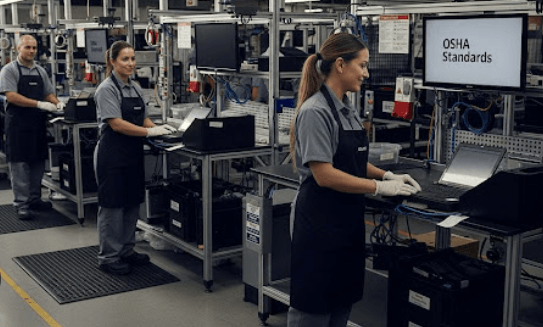

Standing for long shifts takes a real toll on the body, and Australian businesses are paying closer attention to the surface their teams stand on. Anti-fatigue mats have moved from a simple comfort upgrade to a recognised workplace health measure that protects workers across long shifts every day.
Why standing all day takes its toll
When a worker spends hours on hard concrete, the small muscles in the legs and lower back stay tense to keep them upright. Over time, that constant load restricts circulation and tires the body. Anti-fatigue mats give those muscles a yielding surface to push back against, easing the strain.
The slight cushioning encourages tiny micro-movements that improve blood flow and posture. Workers rarely notice these subtle adjustments, but the cumulative effect across a shift is meaningful. Many workplaces report fewer complaints of sore feet, aching backs, and stiff knees after introducing quality matting in their busiest standing zones.
Standing fatigue is also linked to drops in concentration. As muscles tire, attention narrows and reaction times start to slow. In environments where focus matters most, like kitchens, assembly lines, and dispensaries, that slip can mean a small mistake that is costly to fix later in the production day.
Australian workplaces that benefit most
Manufacturing floors, food processing rooms, packing lines, and warehousing all involve long hours on hard surfaces. Reception areas, retail counters, and laboratory benches face the same issue, even when it looks far less obvious. In every case, the underlying problem is the same: long standing on a single hard surface.
Choosing safety mats from Australia means buying products designed for our climate, our shift patterns, and our compliance standards. Local suppliers understand that conditions in a Sydney warehouse differ from a Townsville workshop, and they specify thickness, drainage, and edge profile to suit each setting.
Smaller workplaces benefit too. A single coffee cart, a salon styling station, or a checkout counter at a corner shop will all chew through staff comfort if the floor is unforgiving. Even modest mats in those positions help operators stay sharp through the busiest hours of the trading day each week.
Long-term health effects of poor flooring
Without proper matting, prolonged standing is linked to chronic lower back pain, varicose veins, and persistent foot conditions like plantar fasciitis. These problems rarely appear overnight. They build slowly and tend to surface in workers compensation claims, sick leave figures, and quiet productivity dips months or years later.
Once symptoms set in, recovery is slow and expensive. Treatment may involve physiotherapy, podiatry, and time off the floor. By contrast, the cost of fitting purpose-built anti-fatigue matting from the start is modest. It is one of the few workplace health measures with a clear and immediate financial payoff.
There is also a wellbeing dimension that is harder to put into a spreadsheet. Staff who finish a shift without sore feet are more likely to stay engaged, return in a positive frame of mind, and recommend their employer to friends. That cultural lift is worth far more than the mats cost.
What to look for in a quality mat
A good anti-fatigue mat balances compression and rebound. Too soft, and the worker sinks into something unstable; too firm, and the mat offers little real benefit. Tapered edges prevent trip hazards, and the underside should grip the floor securely so the mat does not creep during a busy shift.
Material choice also matters. Rubber and high-density foam suit dry zones, while drainage-friendly options work better around food preparation or wet processing. Surfaces should resist oils, fats, cleaning chemicals, and the daily scuffing of boots, trolley wheels, and equipment moving past in tight, repeated patterns through each shift.
Sizing is often underestimated. A mat that is too small forces workers to step on and off the edge as they reach for tools, which defeats the purpose. A correctly sized mat lets a worker move freely within their station while staying on the cushioned surface for the entire shift.
How matting fits into broader workplace style
Some employers worry that practical matting clashes with a polished business image. Modern mats come in muted colours and tidy profiles that fade into the working environment. They sit alongside other quiet investments in worker comfort, from supportive footwear and ergonomic stools to printed workwear that builds team identity.
Brands like 84 Cartel show how strong workwear design can sit alongside heavy-duty workplace equipment without looking out of place. The principle is the same with matting: choose products that take the day-to-day battering, fade into the background visually, and quietly do their job for years on end.
Pairing the right floor surface with appropriate footwear and clothing creates a more complete approach to standing comfort. None of these elements work alone. The mat absorbs hard impact, the shoe supports the arch, and breathable workwear keeps the body cool, all at once across a busy working day.
Building a workplace culture around foot safety
A floor strategy works best when staff understand why mats sit where they do. A short induction briefing covers the link between standing surfaces, posture, and long-term joint health. Most employees engage quickly because the benefits become obvious within a few hours of starting on a new mat.
Supervisors play a central role too. They can monitor wear, flag mats that have flattened out, and order replacements before performance drops. Mats are cheap relative to a workers compensation claim, so an organised replacement schedule almost always pays for itself many times over throughout a typical financial year.
Cleaning teams need a clear routine for lifting and washing the mats. Without that, debris collects underneath and creates the very hazards the mats were installed to remove. A short procedure and a labelled storage rack are usually enough to keep the system running smoothly week after week.
See also: Recovery Lost or Stolen Crypto: Not All Crypto Recovery FirmsAre Scams
Making the move to better workplace flooring
For most operations, the cost of full anti-fatigue coverage is modest compared with the price of a single avoidable workers compensation claim. The mats also support broader goals, including reducing slips, dampening noise, and giving workers a more comfortable space to do their best work each day.
Trialling a few mats in the highest-traffic standing zones is a sensible first step. Within a fortnight, staff usually start to volunteer feedback about which positions need them most. From there, rolling out matting through the rest of the workplace becomes straightforward, and the case for it is already made.
Australian businesses ready to take worker wellbeing seriously rarely regret moving on this. Within a few weeks, staff report less fatigue, fewer aches, and steadier output through the shift. From there, anti-fatigue matting tends to become as ordinary and essential as proper lighting, ventilation, and reliable safety signage.
Link 1: https://www.amco.au/ | safety mats from Australia
Link 2: https://84cartel.com/ | 84 Cartel