
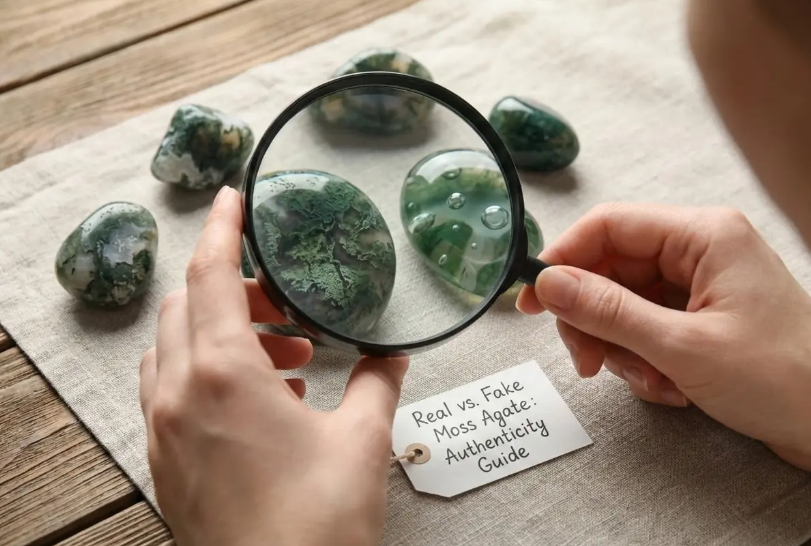

Moss agate is a captivating gemstone cherished for its unique patterns and earthy charm. Its distinctive inclusions, which resemble moss or foliage, make it a favorite choice for those seeking something unconventional and natural in jewelry. Among the various uses of moss agate, moss agate engagement rings have gained popularity for couples looking for a meaningful and organic alternative to traditional diamonds. However, when exploring this gemstone, it is essential to understand the differences between natural and treated moss agate.
Understanding Natural Moss Agate
Natural moss agate is a type of chalcedony, a microcrystalline variety of quartz. Its most striking feature is the dendritic inclusions that look like moss, ferns, or branches, formed by minerals such as iron or manganese. These inclusions create unique patterns that make every stone one-of-a-kind. Unlike some gemstones, natural moss agate does not have a uniform appearance, which adds to its allure.
For those interested in moss agate engagement rings, natural moss agate provides an authentic and earthy aesthetic. Its organic patterns are never exactly the same, making each ring a personal expression of individuality. Buyers who prefer natural gemstones are often drawn to their inherent irregularities, which give the stone its character and charm.
Natural moss agate is generally more durable than it appears. With a hardness of 6.5 to 7 on the Mohs scale, it can withstand everyday wear, making it a viable option for rings, including moss agate engagement rings. However, care should still be taken to avoid harsh chemicals or extreme impacts that might damage the stone.
What is Treated Moss Agate?
Treated moss agate is essentially a natural stone that has undergone various processes to enhance its color, clarity, or overall appearance. Common treatments include dyeing, heating, or impregnation with resins. These methods aim to make the stone more visually appealing and sometimes to simulate the patterns of high-quality natural moss agate.
While treated moss agate can be visually striking, it is important to note that these enhancements may affect the stone’s durability and long-term appearance. Moss agate engagement rings made from treated stones may exhibit more vibrant colors, but they might also be prone to fading or damage if exposed to sunlight or chemicals over time. Consumers seeking moss agate engagement rings often prefer natural stones for their authenticity and enduring beauty.
Key Differences Between Natural and Treated Moss Agate
The differences between natural and treated moss agate go beyond appearance. Natural moss agate is appreciated for its unique inclusions and organic formation, whereas treated moss agate is valued mainly for enhanced visual appeal. One of the most noticeable distinctions is color intensity. Treated stones may display colors that are more vivid than naturally occurring moss agate, but these colors are not always permanent.
Clarity is another differentiating factor. Treatments can reduce visible imperfections or make inclusions more prominent, depending on the desired effect. However, the inclusions in natural moss agate have a depth and randomness that is difficult to replicate artificially. This uniqueness is a major reason why couples choose moss agate engagement rings featuring natural stones, as it adds symbolic meaning to their commitment.
Price is often another factor in distinguishing natural from treated moss agate. Natural moss agate tends to be more expensive due to its rarity and the labor involved in selecting stones suitable for moss agate engagement rings. Treated stones, while more affordable, may not hold the same long-term value or appeal to collectors and gemstone enthusiasts.
See also: Recovery Lost or Stolen Crypto: Not All Crypto Recovery FirmsAre Scams
Choosing the Right Moss Agate for Engagement Rings
When considering moss agate engagement rings, it is essential to determine whether you prefer a natural or treated stone. Natural moss agate offers authenticity and a one-of-a-kind appearance, perfect for couples who value uniqueness and symbolism. Treated moss agate, on the other hand, can provide enhanced visual appeal and affordability, though it may require more careful maintenance.
Ultimately, the choice between natural and treated moss agate depends on personal preference, budget, and lifestyle. Whether you choose a natural stone for its organic beauty or a treated one for its vibrant look, moss agate engagement rings provide a distinctive and meaningful alternative to traditional gemstones.
Conclusion
Understanding the differences between natural and treated moss agate is crucial for anyone considering this gemstone for jewelry, especially moss agate engagement rings. Natural moss agate captivates with its unique inclusions and timeless charm, while treated moss agate offers enhanced color and visual appeal. Each type has its advantages, and the decision comes down to personal taste and values. For those seeking authenticity and natural beauty, natural moss agate is the ideal choice. For those prioritizing vibrant aesthetics or affordability, treated moss agate may be more suitable. Regardless of choice, moss agate engagement rings remain a meaningful, distinctive, and beautiful option for marking life’s most special moments.